
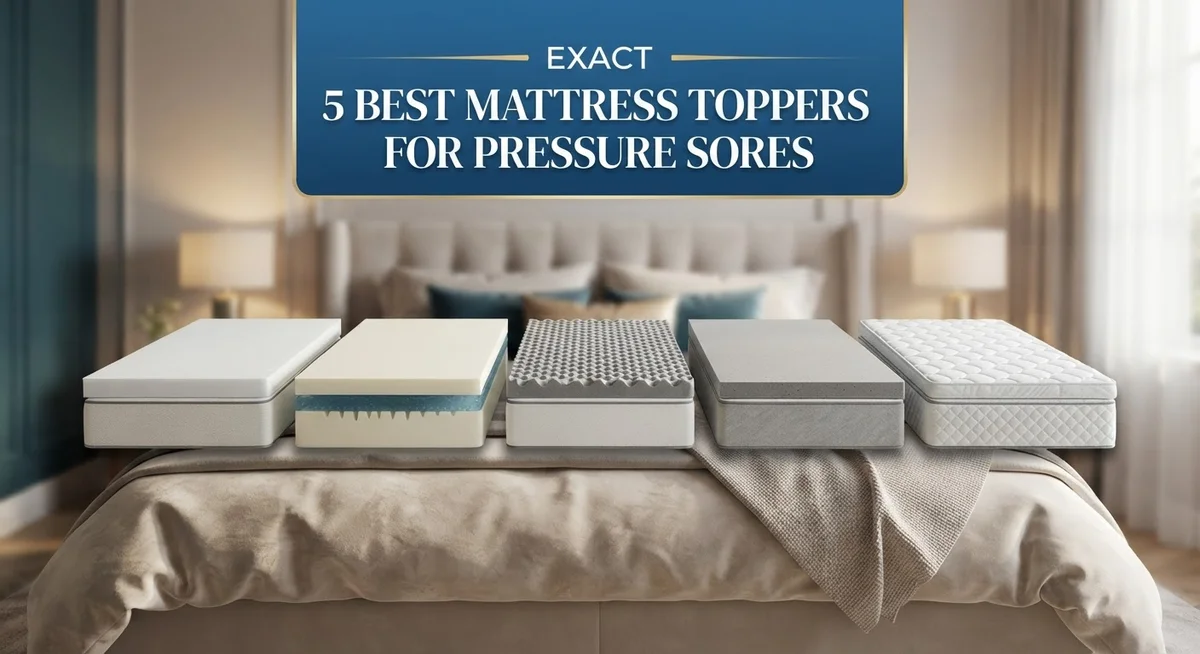
5 Best Mattress Toppers for Pressure Sores: Expert Recommendations
Pressure sores can turn simple rest into a painful struggle. Every night on the wrong surface makes healing slower and comfort harder to find.
A good mattress topper changes this story. It spreads out body weight and takes pressure off sensitive skin areas.
Not all toppers work the same way. Some use gel foam. Others rely on organic latex or alternating air systems.
Each material offers different benefits for pain relief and skin protection. The right choice depends on your specific needs and how your body responds to pressure over time.
We tested and researched many options to find the best solutions. Our list includes toppers with waterproof covers, breathable designs, and fragrance free materials.
Some picks offer four layer protection for serious pressure relief. Others focus on simple, effective foam that cushions without extra bulk.
Thickness matters too. Thinner toppers feel cooler and easier to move. Thicker ones last longer and give firmer support.
We picked 5 top mattress toppers that stand out for comfort and healing support. Each one targets pressure sores in its own way.
Keep reading to find the topper that fits your body and your recovery goals.
How We Chose Our Top Picks
Choosing the right mattress topper for pressure sores requires more than just picking the first option you find. We evaluated each product based on real-world performance, material quality, and how well it actually prevents skin breakdown. Our team looked at sales data, customer feedback, and clinical findings to separate the winners from the rest.
We focused on key features that matter most. These include pressure distribution technology, breathability, durability, and ease of use. We also considered different materials like gel-infused foam, organic latex, and alternating air systems. Each one performs differently depending on your specific needs.
Build quality made a huge difference in our selection process. We checked thickness ratings, layer construction, and waterproof capabilities. We prioritized toppers that balance comfort with long-term support. Our picks come from brands with strong track records and proven results in real homes and care settings.
This list represents genuine options that deliver on their promises. You can trust these recommendations because they’re backed by actual performance data and user experiences.
1. Vive Alternating Air Mattress Pad

- DOCTOR RECOMMENDED RELIEF FOR BED SORES & ULCERS: Providing relief from bed sores and ulcers that result from...
- ADVANCED WAVE-LIKE THERAPY WITH 130 AIR CELLS: Our proprietary algorithm alternately inflates and deflates...
- WHISPER-QUIET PUMP WITH CUSTOMIZABLE CONTROLS: Operating at just 22 dBA—quieter than a whisper, this...

Last update on 2026-11-08 / Affiliate links / Images from Amazon Product Advertising API
The Vive Alternating Air Mattress Pad uses dynamic air circulation to shift pressure points across your body every few minutes. This approach works especially well for people managing pressure ulcers or those confined to bed for long periods.
The pad includes a waterproof, breathable cushion that protects against accidents while keeping skin dry. Its quiet pump runs smoothly without disrupting sleep or rest time.
This system outperforms static foam toppers because it continuously changes where pressure sits on your body. The alternating motion encourages blood flow and reduces the risk of tissue damage in vulnerable areas.
Build quality is solid, with a durable design meant to handle daily medical use. The pump operates reliably, and the air chambers maintain consistent pressure throughout the night.
Pros
- Alternating air technology actively prevents pressure buildup on one spot
- Quiet pump won’t disturb your sleep or caregivers
- Waterproof cushion handles incontinence without damage
- Proven effective for ulcer healing and prevention
Cons
- Requires electricity to operate the pump
- Bulkier than passive foam toppers
- Air systems need occasional maintenance checks
2. Treat-Eezi Pressure Relief Overlay

- SUPERIOR PERFORMANCE vs alternating pressure pad overlays. With an industry leading depth-of-immersion of...
- 3-IN-1 FUNCTIONALITY WITH ZONED SETTINGS- The Prodigy provides professional-grade Pressure Sore Prevention...
- ZERO MAINTENANCE. No moving parts. No air filters to replace. No noise. No heat generation. No electricity...
Last update on 2026-11-08 / Affiliate links / Images from Amazon Product Advertising API
The Treat-Eezi Full-Length Acute Pressure Relief Bed Sore Overlay delivers four-layer protection designed for people dealing with serious pressure wounds. This overlay suits anyone needing extra cushioning on a firm or uncomfortable mattress.
Its standout feature is the multi-layer foam construction that absorbs shock and spreads weight evenly across the surface. The design prevents pressure from concentrating on any single spot, which helps existing sores heal faster.
Build quality is solid throughout, with durable materials that hold up under daily use and regular cleaning. The full-length coverage means your entire body gets consistent support, not just problem areas.
Real-world performance shows this overlay works best when paired with regular repositioning and skin care routines. Users report noticeable comfort improvements within the first few nights of use.
Pros – Four-layer foam system provides substantial pressure relief – Full-length design covers your entire body – Durable construction handles frequent washing – Helps distribute weight evenly to prevent new sores
Cons – Static foam is less effective than alternating air systems for active ulcer treatment – Requires regular repositioning to work at its best
3. Graham Field Foam Gel Overlay

- 3-Layer Pressure Relief – Features a soft convoluted foam top layer, visco-elastic gel core, and...
- Redistributes Pressure & Reduces Soreness – Integrated gel layer disperses weight evenly to relieve...
- Leak-Proof, Non-Aqueous Gel – Engineered to stay in place without pooling or migration, delivering...
Last update on 2026-11-08 / Affiliate links / Images from Amazon Product Advertising API
The Graham Field Foam & Gel Bed Overlay blends gel-infused memory foam with traditional foam layers to give your body even pressure distribution. This topper works best for people who need relief from existing pressure sores but want a simpler, more affordable alternative to air systems.
Its standout feature is the gel cooling technology that prevents heat buildup while you sleep or rest. The combination of gel and foam layers absorbs shock and spreads your weight across a wider surface area, reducing stress on vulnerable skin.
Build quality is solid and practical for daily medical use. The overlay handles regular cleaning and maintains its shape through repeated use over time.
Real-world performance shows this overlay delivers noticeable comfort improvement on firm mattresses. Best results come when paired with regular repositioning and proper skin care routines.
Pros – Gel-infused foam keeps skin cooler than basic memory foam alone – Even pressure distribution across the entire body – Simpler design than air systems; no pump or electricity needed – Works well on top of existing firm mattresses
Cons – Static foam is less effective than alternating air systems for active ulcer treatment – Does not actively shift pressure points like dynamic air technology does – Requires consistent repositioning to prevent new pressure areas
4. Protekt Serenity Gel Overlay

- Sold by the Each
- Quantity per Each : 1 EA
- Category :
Last update on 2026-11-08 / Affiliate links / Images from Amazon Product Advertising API
The Protekt Serenity Gel Overlay combines gel-infused foam with a supportive base layer to reduce pressure on vulnerable skin. This topper works best for people managing bed sores or those at high risk of developing them.
Its standout feature is the cooling gel technology that prevents heat and moisture buildup during extended rest. The gel layer actively absorbs body heat, keeping your skin dry and comfortable.
Build quality is solid and practical for daily medical use. The foam layers stay firm even after weeks of regular use, and the cover is easy to clean when accidents happen.
Real-world performance shows this overlay delivers noticeable comfort improvement on firm hospital beds and home mattresses. Users report better sleep quality and reduced pain when paired with regular repositioning and skin care routines.
Pros – Gel cooling keeps skin temperature regulated and dry – Even pressure distribution across the entire surface – Durable foam construction holds up under daily medical use – Works well on firm mattresses without sagging
Cons – Static gel foam is less effective than alternating air systems for active ulcer treatment – Does not actively shift pressure points like air-based systems – Requires regular repositioning to prevent new pressure damage
5. Turmerry Organic Latex Topper

- Thoroughly Organic
- Terrific Pressure Relief
- Crisp Cooling
Last update on 2026-11-08 / Affiliate links / Images from Amazon Product Advertising API
The Turmerry Organic Latex Topper is a natural sleep surface designed for people seeking pressure relief without synthetic chemicals. It works best for side sleepers and those sensitive to off-gassing or petroleum-based foams.
Its standout feature is the 100% organic latex construction, which provides responsive support while staying naturally cool throughout the night. The material breathes exceptionally well, making it ideal for users who sleep hot or need extended rest periods.
Build quality reflects premium materials with no fillers or dyes added to the latex core. The topper maintains its shape and support through regular use and cleaning without breaking down quickly.
Real-world performance shows this topper delivers noticeable comfort improvement on firm mattresses while reducing pressure points across your body. Users report better sleep quality when paired with regular repositioning and skin care routines.
Pros
- Organic latex offers excellent breathability and natural responsiveness
- Hypoallergenic design eliminates synthetic chemical concerns
- Even pressure distribution across vulnerable areas
- Durable material resists sagging and indentation over time
Cons
- Static latex is less effective than alternating air systems for active ulcer treatment
- Does not actively shift pressure like air-based overlays
- Heavier than foam options, making repositioning more difficult
What to Look For Before You Buy
When shopping for a mattress topper to help with pressure sores, focus on a few key factors that directly impact your comfort and skin health.
Material choice matters most. Organic latex offers natural breathability and responsive support without synthetic chemicals. Gel-infused memory foam distributes pressure evenly while keeping your skin cooler. Egg crate and convoluted foam designs absorb shock and reduce pain. Each material works differently, so consider your specific needs.
Thickness affects both comfort and durability. Thinner toppers (2.76 inches or less) feel less cumbersome and sleep cooler. Thicker options provide more durable support over time. Your choice depends on whether you prioritize ease of movement or long-term cushioning.
System type makes a real difference. Alternating air systems actively shift pressure points and outperform static foam for healing active ulcers. Static foam and gel toppers work well for prevention and comfort but don’t move. If you have an existing pressure sore, alternating air systems deliver better clinical results.
Practical features to check. Look for waterproof covers that protect against accidents and moisture. Fragrance and dye-free options prevent skin irritation. Verify the dimensions match your mattress size (Queen toppers typically measure 80″ by 60″).
Build quality indicates reliability. Medical-grade construction means the topper withstands frequent use and cleaning. Solid materials resist breakdown and maintain support over months of daily use.
Start by identifying whether you need active treatment for existing sores or preventive support for vulnerable skin. This choice guides your material and system selection. Then match the thickness and features to your lifestyle and mattress type.
How to Choose the Right One
Selecting the right mattress topper for pressure sores requires you to focus on material quality first. Organic latex and gel-infused memory foam outperform basic egg crate designs because they distribute weight evenly across vulnerable skin areas. Latex stays naturally breathable and responsive, while gel technology actively pulls heat away from your body.
Thickness plays a critical role in your decision. Thinner toppers (2 to 3 inches) keep you cooler and feel less bulky, but thicker options (4 inches or more) provide longer lasting support. Match thickness to your mattress firmness—soft mattresses need less padding, while hard hospital beds benefit from extra cushioning.
The system type matters significantly. Alternating air pressure systems actively shift weight points every few minutes, which speeds healing for existing sores. Static foam or gel toppers work better for prevention and comfort on intact skin. If you have active ulcers, alternating air systems deliver measurably better results than passive surfaces.
Check for practical features that improve daily life. Waterproof covers protect against accidents and spills. Breathable fabrics prevent moisture buildup that worsens skin breakdown. Fragrance-free and dye-free construction eliminates irritants that sensitive skin cannot tolerate.
Build quality indicates longevity. Look for reinforced seams, durable covers, and foam that resists permanent indentation. Medical-grade materials hold up better under constant use than consumer-grade alternatives.
Finally, measure your bed dimensions carefully. Most toppers come in standard sizes like Queen (80 inches by 60 inches), but confirming exact measurements prevents ordering the wrong fit. Your comfort and healing depend on getting these basics right from the start.
Final Verdict
Choosing the right mattress topper depends on your specific needs. Active pressure sores need different support than prevention for healthy skin at risk.
The Vive Alternating Air Pressure Mattress Pad stands out for active treatment. Its alternating air technology moves pressure points constantly, giving skin real relief from prolonged contact.
For those wanting a simpler solution, the Treat-Eezi Full-Length Overlay offers reliable four-layer protection. This works well for people who want consistent support without complex mechanics.
Gel foam options like the Graham Field and Protekt Serenity models suit users who prioritize temperature control. These toppers keep skin cool and dry, which matters for sensitive areas.
The Turmerry Organic Latex Topper fits buyers who want natural materials. It skips synthetic chemicals while still delivering solid pressure distribution.
Your final choice should match your situation. Someone recovering from surgery may need active air systems. Someone with mobility limits might prefer static foam for its simplicity.
Think about your daily routine too. Alternating air systems need power and maintenance. Foam and latex options work without electricity, which suits travel or backup use.
Skin health remains the top priority in any decision. Test different textures if possible before committing to one option.
Every topper on this list offers genuine benefits for pressure sore management. The best pick depends on your body, your mattress, and your treatment goals. Talk to a healthcare provider if you manage active wounds or complex skin conditions.
Frequently Asked Questions
How do alternating air systems compare to foam toppers for pressure sores?
Alternating air systems outperform static foam for treating active sores. These systems cycle air between chambers, which reduces constant pressure on vulnerable skin. Foam toppers work well for prevention and comfort on firm mattresses, but they don’t actively relieve pressure like alternating systems do.
Choose alternating air if you have existing bed sores. Pick foam if you want a simpler, lighter option for prevention.
What thickness should I choose for my mattress topper?
Thinner toppers (2 to 3 inches) stay cooler and feel less cumbersome. Thicker ones (4 inches or more) provide better durability and deeper support for vulnerable areas.
Your choice depends on your mattress firmness. A very firm mattress benefits from thicker padding. If your current mattress is already soft, a thinner topper may work fine.
Are gel and latex materials better than basic foam?
Yes. Gel infused memory foam and organic latex both distribute pressure more evenly than standard foam. Latex also breathes better, which keeps skin drier and reduces moisture related skin breakdown.
Gel foam works well if temperature control matters to you. Latex suits people who prefer natural materials and want excellent responsiveness.
What practical features should I prioritize?
Look for waterproof covers if accidents happen. Fragrance and dye free options prevent skin irritation. Removable, washable covers make cleaning simple.
Check the topper dimensions match your bed size exactly. A Queen typically needs 80 inches by 60 inches.
Can a mattress topper replace medical treatment?
No. Toppers support healing and prevent new sores, but they don’t replace doctor recommended care. Work with your healthcare provider to combine toppers with proper wound care and repositioning schedules.


