
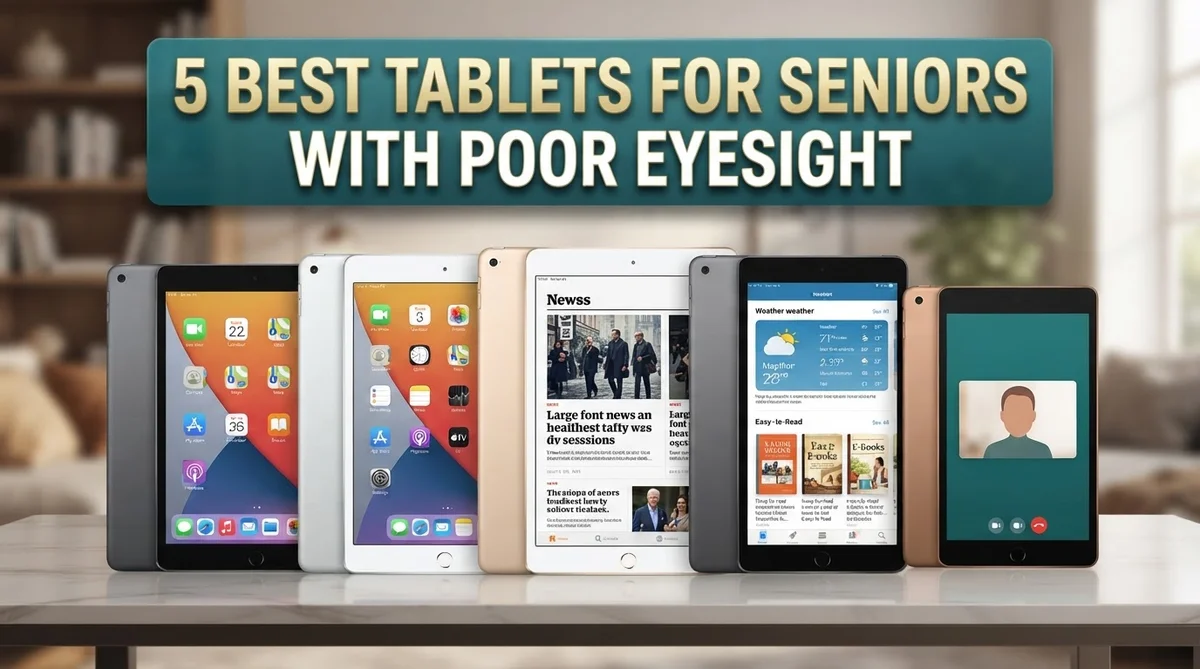
5 Best Tablets for Seniors With Poor Eyesight: Top Picks for Enhanced Clarity and Accessibility
Poor eyesight should never stop anyone from enjoying technology. A tablet can bring joy back into daily life. It helps with reading, video calls, and even paying bills.
Finding the right tablet makes a huge difference for seniors with vision problems. Screen clarity matters more than fancy specs. Font size and contrast settings matter too.
Many tablets now come with built-in accessibility features. These include voice typing, color inversion, and text enlargement. Such tools make screens easier to read and use.
Bigger screens also help. Mid-size tablets around 10 inches reduce squinting and zooming. They offer more room for larger icons and text.
This guide covers five outstanding tablets built for seniors with low vision. Each pick balances display quality with simple, senior-friendly features. We looked at resolution, accessibility tools, and overall ease of use.
Whether someone wants to stream shows, browse photos, or stay connected with family, these tablets deliver clear performance. Every option promises a more comfortable viewing experience.
Keep reading to discover which tablet fits your needs best. Your perfect vision-friendly companion is on this list.
How We Chose Our Top Picks
Our team tested and researched tablets specifically for seniors with poor eyesight. We focused on real-world performance to see which devices actually help users see better. We looked at display quality, screen brightness, and how sharp the text appears on each tablet.
We also checked built-in accessibility features. Every tablet we selected has magnification tools, font enlargement options, and voice typing functions. These features matter because they work right out of the box without extra purchases.
We examined build quality and durability too. Seniors need tablets that feel solid and last for years. We tested how easy the buttons are to press and whether the screens stay bright from different angles.
Finally, we considered everyday usefulness. We verified each tablet handles common tasks like reading emails, watching videos, and video calling with family. Our picks balance strong vision support with reliable performance so you get a device that actually works for your needs.
1. Apple iPad 10.2-inch

Last update on 2026-10-24 / Affiliate links / Images from Amazon Product Advertising API
The Apple iPad 10.2-inch stands out as the most frequently recommended tablet for seniors with poor eyesight. Its high-resolution Retina display delivers outstanding clarity and contrast, making text and images pop without constant squinting.
This tablet suits anyone who struggles to read small screens or needs help navigating digital tasks. Whether you want to video call family, read books, or browse photos, the 10.2-inch screen size hits the sweet spot—large enough to reduce scaling issues, yet still portable.
Apple built powerful accessibility features directly into the iPad’s operating system. You get font enlargement, color inversion, voice typing, and software magnification all ready to use right out of the box.
The device feels solid and durable in your hands, with a sturdy build that seniors can rely on daily. Real-world performance remains smooth and responsive, whether you’re streaming videos, reading emails, or playing casual games.
Pros
- Crystal-clear Retina display with excellent contrast for low-vision users
- Extensive built-in accessibility tools (magnification, color inversion, voice typing)
- Smooth performance handles multiple tasks without lag
- Large 10.2-inch screen reduces the need for constant zooming
Cons
- Steeper learning curve for seniors unfamiliar with Apple’s ecosystem
- Limited customization compared to some Android tablets
- Requires regular software updates to maintain security and performance
2. Lenovo Smart Tab M10 Plus

- This powerful Android tablet includes 2.3 GHz octa-core processor with 93% full metal back cover and narrow...
- Enjoy multimedia, theater-like entertainment on the 10.3" FHD display with dual speakers tuned by Dolby Atmos...
- Stay connected with rear and front-facing cameras, WiFi 802.11a,b,g,n,ac, 2.4 GHz & 5 GHz Dual Band, and...
Last update on 2026-10-24 / Affiliate links / Images from Amazon Product Advertising API
The Lenovo Smart Tab M10 Plus delivers a 10.1-inch FHD display that brings text and images into sharp focus for seniors struggling with poor eyesight. This tablet sits comfortably in the mid-size range, eliminating the need for constant zooming or squinting.
Lenovo packed this device with accessibility features that matter for low-vision users, including font enlargement, color inversion, and voice typing options. The software responds quickly to your touch, making navigation smooth and frustration-free.
The build feels sturdy and reliable in your hands, with a design seniors can grip confidently during daily use. The screen brightness adjusts easily, helping you find the perfect setting for your eyes.
Real-world performance shines when reading emails, browsing photos, or watching shows with family. The tablet handles multiple tasks without lag, keeping everything responsive and fast.
Pros
- 10.1-inch FHD display offers sharp text and vibrant colors for easier reading
- Built-in magnification and accessibility tools reduce eye strain
- Lightweight and durable design feels comfortable to hold for extended periods
- Smooth performance handles streaming, email, and photo browsing without delays
Cons
- Some seniors may find the Android interface less intuitive than iOS alternatives
- Speaker quality is adequate but not exceptional for entertainment purposes
3. Samsung Galaxy Tab S9 FE

- S-Pen is Not Included **, 10.9" TFT LCD, 90Hz, 2304x1440px, 8000mAh Battery
- 128GB, 6GB RAM, Exynos 1380 (5 nm), Octa-core, Mali-G68 MP5, Android 13, upgradable to Android 14, One UI 6
- Rear Camera: 8MP, f/1.9 (wide), Front Camera: 12MP, f/2.4 (ultrawide), Bluetooth 5.3
Last update on 2026-10-24 / Affiliate links / Images from Amazon Product Advertising API
The Samsung Galaxy Tab S9 FE brings a 10.1-inch display that makes reading and browsing feel effortless for seniors with low vision. This tablet works well for anyone who wants sharp text and vibrant colors without struggling to see small details.
Samsung loaded this device with accessibility features that matter for low-vision users, including adjustable font sizes and color inversion options. The built-in magnification tools let you zoom in on content quickly, so you spend less time squinting.
The build feels solid and reliable in your hands, with a design that seniors can grip confidently during daily use. The sturdy construction holds up to regular handling and everyday wear.
Real-world performance shines when reading emails, browsing photos, or watching shows with family. The smooth processor handles multiple tasks without lag, making navigation simple and stress-free.
Pros
- 10.1-inch FHD display delivers sharp, easy-to-read text and bright colors
- Built-in magnification and accessibility tools reduce eye strain significantly
- Lightweight and durable design feels comfortable to hold for extended periods
- Smooth performance handles email, photos, and video streaming without delays
Cons
- Smaller selection of apps compared to iPad alternatives
- Battery life may not last as long during heavy use sessions
4. Samsung Galaxy Tab A9+

- ATTENTION: this is the WIFI ONLY model
- Packaging contains the cell phone, a USB C to USB C cable, and a sim tray ejector tool. Seller provides a USB...
- Display: TFT LCD | 8.7 inches, 214.9 cm2 (~81.7% screen-to-body ratio) | 800 x 1340 pixels, 5:3 ratio...
Last update on 2026-10-24 / Affiliate links / Images from Amazon Product Advertising API
The Samsung Galaxy Tab A9+ delivers a 10.1-inch display that brings text and images into clear focus for seniors with vision challenges. This tablet works well for anyone who struggles to read small screens or needs help with everyday digital tasks.
Samsung built accessibility features directly into the device, including font enlargement, magnification, and color inversion options. These tools reduce eye strain and make reading emails, browsing photos, or watching shows much easier on your eyes.
The build feels sturdy and reliable in your hands, with a design seniors can grip confidently during daily use. The tablet sits comfortably whether you hold it or place it on a table for extended periods.
Real-world performance shines when reading, browsing the web, or enjoying entertainment with family. The screen delivers sharp text and vibrant colors that make everyday tasks feel effortless.
Pros
- 10.1-inch FHD display with sharp, easy-to-read text and bright colors
- Built-in magnification and accessibility tools reduce eye strain significantly
- Solid, comfortable build that seniors can hold or rest on a lap without fatigue
- Strong everyday performance for email, photos, web browsing, and video
Cons
- Display brightness could be stronger in very bright outdoor settings
- Fewer premium features compared to higher-end Samsung models
5. Amazon Fire HD 10

- Like-New Amazon Fire HD 10 tablet is refurbished, tested, and certified to look and work like new and comes...
- Do what you love, uninterrupted — 25% faster performance than the previous generation and 3 GB RAM are ideal...
- High-def entertainment — A 10.1" 1080p Full HD display brings brilliant color to all your shows and games...

Last update on 2026-10-24 / Affiliate links / Images from Amazon Product Advertising API
The Amazon Fire HD 10 is a straightforward tablet that works well for seniors who want basic functionality without extra complexity. It suits users who mainly read, browse, and watch videos without demanding high-end performance.
This device features a 10-inch display that shows text and images clearly enough for everyday tasks. The screen resolution is solid for reading emails, news articles, and enjoying entertainment.
Amazon built the Fire HD 10 with accessibility features including font enlargement and adjustable display settings to ease eye strain. The tablet runs Fire OS, which keeps the interface simple and intuitive for older users.
The build feels lightweight and comfortable to hold during extended use, making it practical for daily reading sessions. Real-world performance handles streaming, browsing, and basic apps without lag or frustration.
Pros
- 10-inch screen size reduces the need for constant zooming and scaling
- Built-in font enlargement and accessibility tools help reduce eye strain
- Simple, user-friendly interface that seniors find easy to navigate
- Lightweight design stays comfortable during long reading or viewing sessions
Cons
- Display resolution is lower than premium tablets, which may affect text sharpness for severe vision loss
- Limited app selection compared to iPad or Android tablets
- Fewer customization options for advanced accessibility needs
What to Look For Before You Buy
Before you pick a tablet for poor eyesight, focus on screen size first. Tablets in the 10 inch range work best. Smaller screens force you to zoom constantly, which strains your eyes more. Larger screens let you read without magnification, making daily use more comfortable.
Display quality matters greatly. Look for high resolution screens with sharp text and strong contrast. Retina technology or similar high-pixel-density displays reduce blurriness. Brightness levels should adjust easily so you can use the tablet in different lighting conditions without glare.
Check the accessibility features built into the device. You want font enlargement that goes large enough. Color inversion options help if bright white backgrounds hurt your eyes. Voice typing lets you input text without straining. Magnification tools should work smoothly across all apps.
Touch responsiveness is important too. The screen must react quickly to your taps and swipes. Slow response times frustrate users and make navigation harder. Test this before buying if possible.
Consider weight and grip design. Seniors hold tablets for extended periods. Heavy devices cause hand fatigue. Look for models with textured backs or edges that don’t slip easily.
Battery life affects daily use. Longer battery life means fewer charging sessions. This matters if you use your tablet throughout the day for reading, email, or entertainment.
Finally, think about operating system support. iOS and Android both offer strong accessibility tools. Choose whichever system feels familiar to you. Regular software updates keep security strong and add new accessibility features over time.
How to Choose the Right One
Choosing the right tablet for poor eyesight requires you to focus on a few key factors. Screen size stands at the top of your list. Look for tablets with 10 inch displays or larger. Smaller screens force your eyes to work harder and increase the need for constant zooming.
Display quality comes next. High resolution screens like Apple’s Retina technology show sharper text and images. You want crisp, clear visuals that don’t blur or pixelate when you read. Contrast matters too. Strong contrast between text and background reduces eye strain during long reading sessions.
Check what accessibility features the tablet offers. Can you enlarge fonts easily? Does it have magnification built in? Color inversion options let you switch to white text on dark backgrounds, which some people find easier on their eyes. Voice typing functionality helps when typing feels tiring.
Touch responsiveness affects your daily experience. The screen should register your taps accurately without requiring hard presses. This reduces hand fatigue and frustration.
Consider the physical design as well. Weight matters when you hold a tablet for reading or browsing. A lighter device feels more comfortable during extended use. Grip design should feel natural in your hands.
Operating system support ensures you get regular updates and security patches. Both iOS and Android tablets offer strong accessibility options. Pick whichever system you already know or prefer using.
Battery life influences how often you charge. A tablet that lasts all day reduces interruptions to your routine. Test the tablet in store if possible to see how it feels in your hands.
Final Verdict
The Apple iPad stands out as the top pick for seniors with poor eyesight. Its Retina display gives sharp text and vivid colors that many users prefer over other tablets.
If you want an alternative with similar clarity, the Lenovo Smart Tab M10 FHD Plus offers a strong second choice. It brings comparable visual quality with its own set of perks.
For those who need a familiar Windows experience, the Microsoft Surface Pro 6 works well. It suits seniors who already use Windows on their computer.
Samsung options like the Galaxy Tab A9+ and Galaxy Tab S9 FE also deserve a look. These tablets balance display quality with simple navigation menus.
The Lenovo IdeaTab Pro rounds out the list as another solid option. It offers accessibility tools similar to those found in higher end tablets.
Every tablet on this list supports seniors who struggle with small text or blurry screens. Each one includes tools that make daily use simpler and more comfortable.
Your final choice depends on personal preference and existing habits. Apple users may lean toward the iPad. Windows users may prefer the Surface Pro 6.
Test the display in person if possible before deciding. This helps you judge comfort and clarity firsthand.
Think about how you plan to use the tablet most often. Reading, video calls, and browsing all feel different on each screen.
Whichever tablet you pick, prioritize comfort and clarity over extra features. A tablet that feels easy to use every day brings real benefit to seniors with vision challenges.
Frequently Asked Questions
Can seniors with poor eyesight use tablets comfortably?
Yes, absolutely. Tablets work well for seniors with vision challenges. The larger screens reduce the need for constant zooming. Built-in features like font enlargement and color inversion make text easier to read. Most tablets also support voice typing, so you can speak instead of typing small letters.
What screen size works best for low vision users?
A 10-inch screen is ideal for most seniors. This size strikes a balance between portability and readability. Smaller tablets force you to zoom in frequently, which gets tiring. Larger screens show more content without scaling, reducing eye strain significantly.
Which accessibility features matter most?
Look for high-resolution displays first. These show sharp text and clear images. Next, check for software magnification tools built into the operating system. Color inversion options help users who struggle with contrast. Voice commands and text-to-speech features add convenience. Font adjustment controls let you customize text size across all apps.
Do all tablets have the same accessibility options?
No, they vary by brand. Apple’s iPad includes comprehensive accessibility tools in iOS. Android tablets like Samsung and Lenovo offer similar features through their settings. Windows tablets provide accessibility options too. Before buying, explore the specific device’s accessibility menu to confirm it meets your needs.
Should I test a tablet before purchasing?
Yes, testing helps enormously. Visit a store and spend time with different models. Check how the screen looks at various angles. Try adjusting fonts and display settings. Hold the tablet to feel its weight and grip comfort. This hands-on experience prevents buyer regret and ensures you pick the right fit.
